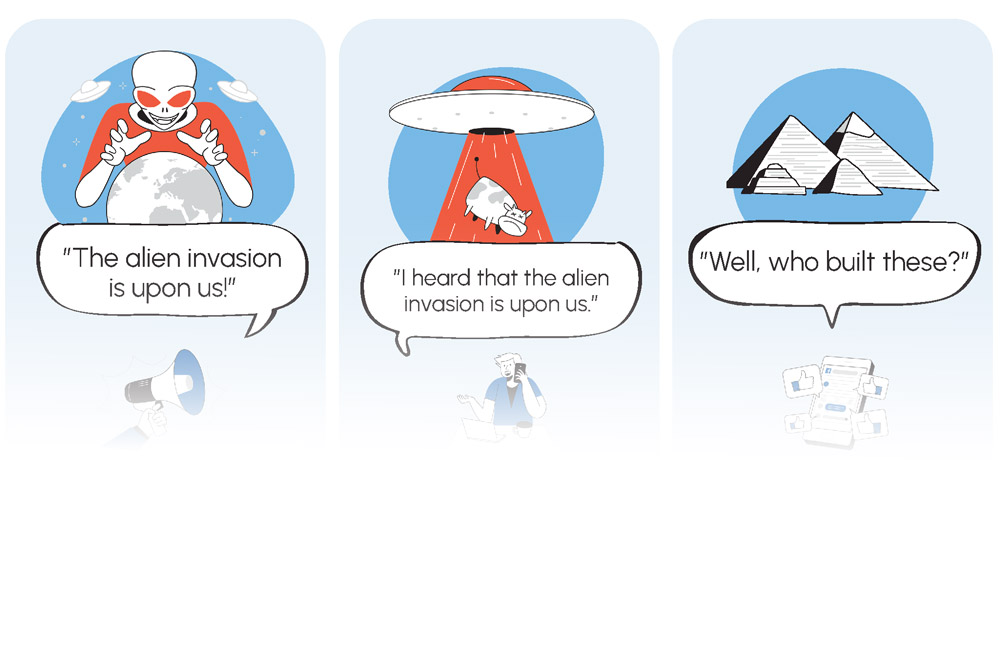
Fact-checking is the process of checking and verifying claims, information or assertions to ensure their accuracy and reliability. This process aims to distinguish truthful information from inaccurate or misleading information.
Below is a checklist of practical tips to help you check facts and ensure that communication is truthful.
Check the sources
Whenever you encounter new information, make sure you know its source.
Ask yourself, where this information comes from. Is the source reliable? Check whether the information comes from a reputable news publication, a study, or an expert.


Compare multiple sources
Don’t settle for just one source. Compare different sources to get a broader perspective.
If possible, look for information presented from different perspectives.
Check the veracity of claims
If you hear or read claims that seem dubious, seek confirmation or refutation from reliable sources.
Do not accept claims as true without proper verification.


Use fact-checking tools
Make use of the fact-checking tools and resources available online. Many organisations offer services to check common claims and rumours.
Examples include Snopes, FactCheck.org, and PolitiFact.
Check photo and video material
A reverse image search can help verify whether a picture or video is real or fake. If you suspect that someone is using an image without permission or using an image to spread disinformation, you can use a reverse image search to verify the origin of the image and authenticate it.
You can also see if an image or video has been published before.


Be critical
Develop your critical thinking skills and question sources of information.
Don’t believe everything you hear or read without proper verification.
Check the dates
Make sure the information is current by checking the date.
Outdated information can be misleading.

Illustrations: Storyset